

The healthcare workforce is evolving, and with it, the expectations of new graduates entering the field. Today’s healthcare students are more informed, tech-savvy, and values-driven than ever before. Understanding what they seek from employers after graduation can help healthcare organizations attract and retain top talent, align career goals, and build a sustainable workforce for the future.
This shift is particularly relevant for the Gen Z healthcare workforce, whose preferences differ from previous generations. Employers who adapt to these expectations are better positioned to meet the demands of a rapidly changing healthcare environment.
Healthcare students are not just looking for a paycheck—they want meaningful work, growth opportunities, and employers who reflect their values. Key expectations include:
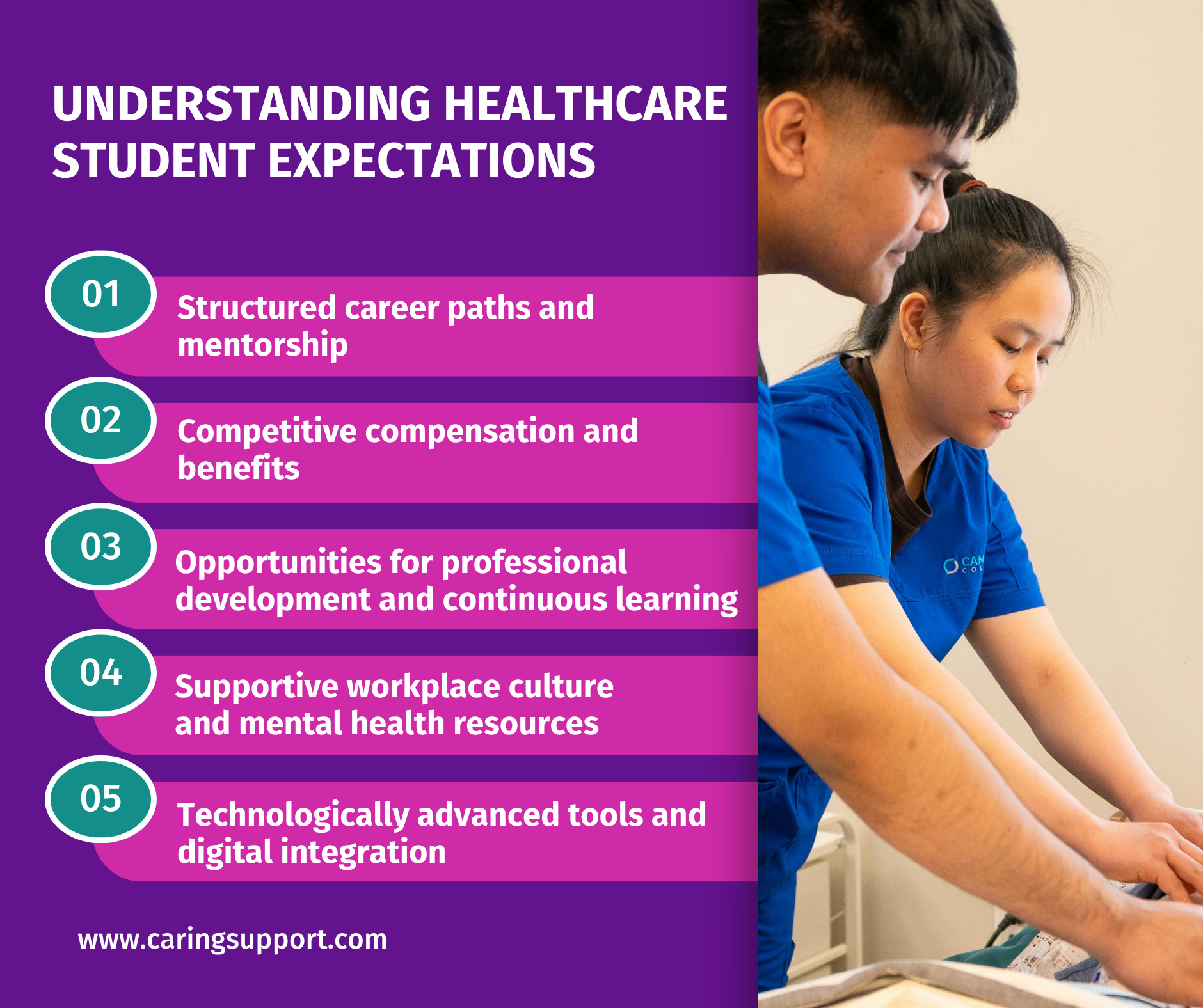
According to the Canadian Federation of Nurses Unions, healthcare students today prioritize work-life balance and career growth almost as highly as salary, making employer responsiveness crucial.
Generation Z is entering healthcare with unique perspectives. They value transparency, inclusivity, and technology-enabled workplaces. A survey from Deloitte shows that Gen Z employees are particularly drawn to organizations that demonstrate a clear mission and social responsibility.
Employers who understand these motivations can tailor their recruitment and retention strategies to attract high-quality candidates and reduce early-career turnover.
For example, post-secondary institutions play a critical role in shaping career readiness. Healthcare organizations can partner with schools to better align opportunities with the role of post-secondary institutions in solving Canada’s healthcare talent shortage.
Healthcare students expect employers to provide structured onboarding, mentorship programs, and clear promotion pathways. This ensures they can grow professionally and achieve their career goals. Platforms and programs that support learning, skill validation, and ongoing training are highly valued.
For guidance, see helping students thrive and preparing Canadian healthcare graduates.
While meaningful work is critical, fair compensation remains a priority. Healthcare students often compare potential employers based on salary, benefits, and opportunities for advancement. Employers who offer transparent, competitive packages are more likely to attract top talent.
Gen Z healthcare professionals expect technology to streamline workflow, reduce administrative burdens, and enhance patient care. Hospitals and clinics that adopt modern tools and platforms demonstrate a commitment to innovation.
For example, Caring Support’s technology and mission shows how digital platforms improve accessibility for healthcare professionals and support smoother onboarding.
New graduates value workplace environments that prioritize mental health, inclusivity, and collaboration. According to HealthCareCAN, workplaces that foster psychological safety and team cohesion see higher retention rates among early-career professionals.
Additionally, platforms that reduce barriers in the healthcare industry, like Caring Support reduces barriers across the healthcare industry, make it easier for new grads to integrate smoothly into their roles.
Healthcare students want roles that allow them to make a tangible difference in patient outcomes. Employers that clearly communicate their mission and impact attract candidates who are driven by purpose rather than just compensation.
Alumni success stories and professional growth opportunities, highlighted in how Caring Support enhances alumni success in healthcare, can be powerful motivators.
To meet the expectations of today’s healthcare students:
They seek clear career paths, mentorship, competitive compensation, supportive culture, and technology-enabled workplaces.
Gen Z brings unique values, including transparency, inclusivity, and mission-driven priorities. Meeting their expectations improves recruitment and retention.
Employers can offer mentorship programs, competitive packages, flexible schedules, and showcase organizational values.
Digital tools streamline workflows, reduce administrative burdens, and allow new grads to focus on patient care and professional development.
Schools align student skills with employer needs, provide clinical placements, and support career readiness programs.
The future of the healthcare workforce depends on understanding and meeting the expectations of new graduates. Employers who embrace mentorship, technology, supportive culture, and clear career pathways are more likely to attract and retain top talent. By aligning recruitment strategies with the values of today’s healthcare students, organizations can ensure sustainable growth and better patient outcomes.

We'll keep you updated on all new application updates and features!