
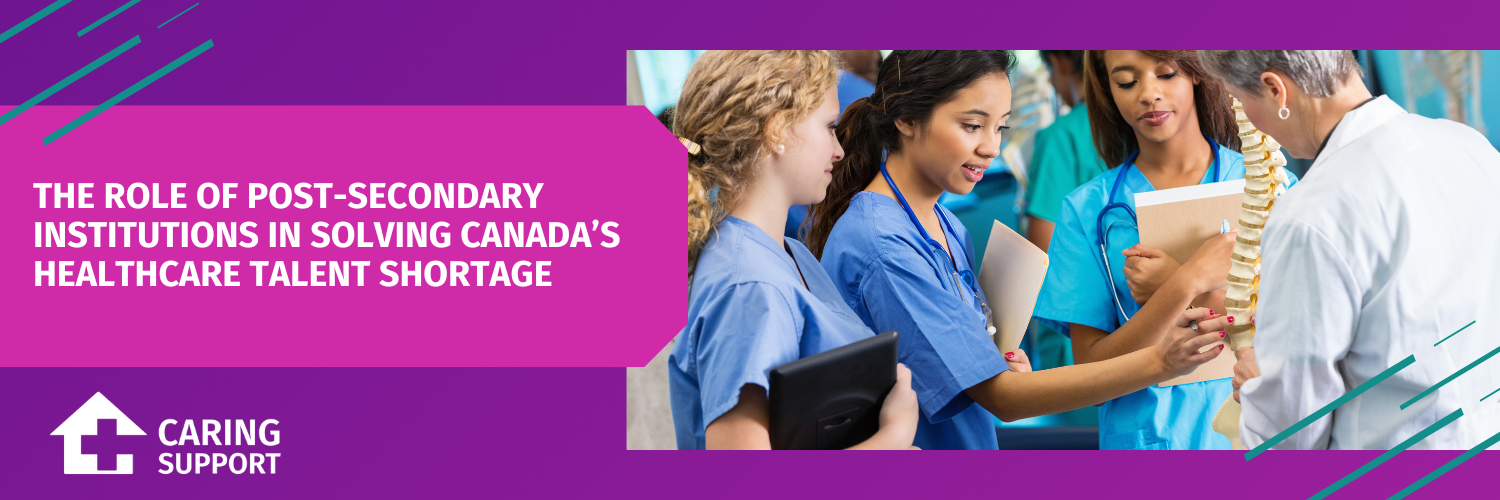
Canada’s healthcare sector faces a growing challenge: a shortage of qualified professionals across hospitals, clinics, and long-term care facilities. Post-secondary institutions (PSIs) play a critical role in preparing the next generation of healthcare workers to meet these demands. By integrating innovative programs, practical training, and partnerships with employers, schools can equip graduates to thrive in a competitive job market while helping bridge workforce gaps.
This article explores how Canadian colleges, universities, and vocational schools can actively contribute to solving the healthcare talent shortage, the strategies that work, and the impact on both students and healthcare organizations.
The demand for healthcare professionals in Canada is projected to rise steadily. Aging populations, increased chronic conditions, and expanded healthcare services have created high demand for nurses, personal support workers (PSWs), allied health professionals, and specialized clinicians. According to The Canadian Institute for Health Information (CIHI), many regions are already facing critical shortages, which can affect patient care and operational efficiency.
For post-secondary institutions, this means that preparing students for real-world healthcare challenges has never been more important. PSIs must not only focus on education but also on employability, practical skills, and industry connections.
Hands-on training is essential in healthcare education. Programs that integrate clinical placements, practicums, and internships allow students to apply theoretical knowledge in real-world settings. Such experiences increase competence, confidence, and employability.
Caring Support helps institutions connect students to clinical opportunities and placements through technology-driven solutions. Learn more about preparing graduates for the workforce in Helping Students Thrive: Preparing Canadian Healthcare Graduates for the Job Market in Late 2025.
Strong partnerships between PSIs and healthcare organizations are key to bridging the talent gap. Collaborating with hospitals, clinics, and long-term care facilities ensures that programs align with industry needs and that students are job-ready upon graduation.
Caring Support offers tools that facilitate these partnerships, enabling institutions to strengthen relationships with employers and improve student placement outcomes. Discover how schools can maximize employer connections in Building Relationships with Employers Using Caring Support.
Many students face barriers to entering the healthcare workforce, including financial constraints, lack of access to professional networks, and unclear pathways from education to employment. PSIs can help reduce these barriers through:
Caring Support works to eliminate these obstacles and create more equitable opportunities for healthcare students. Read more in Caring Support Reduces Barriers Across the Healthcare Industry.
The role of PSIs does not end at graduation. Alumni programs and career support services can help graduates navigate the early years of their healthcare careers, access continuing education, and explore advancement opportunities.
By integrating alumni tracking and support systems, schools can ensure long-term professional growth for their graduates. Explore successful strategies in How Caring Support Enhances Alumni Success in Healthcare.
Optimizing student placement is critical for developing skilled healthcare professionals. Modern digital platforms allow schools to:
Institutions that embrace these technologies see measurable improvements in placement rates and student satisfaction. Learn how to improve outcomes in Improving Student Placement Rates.
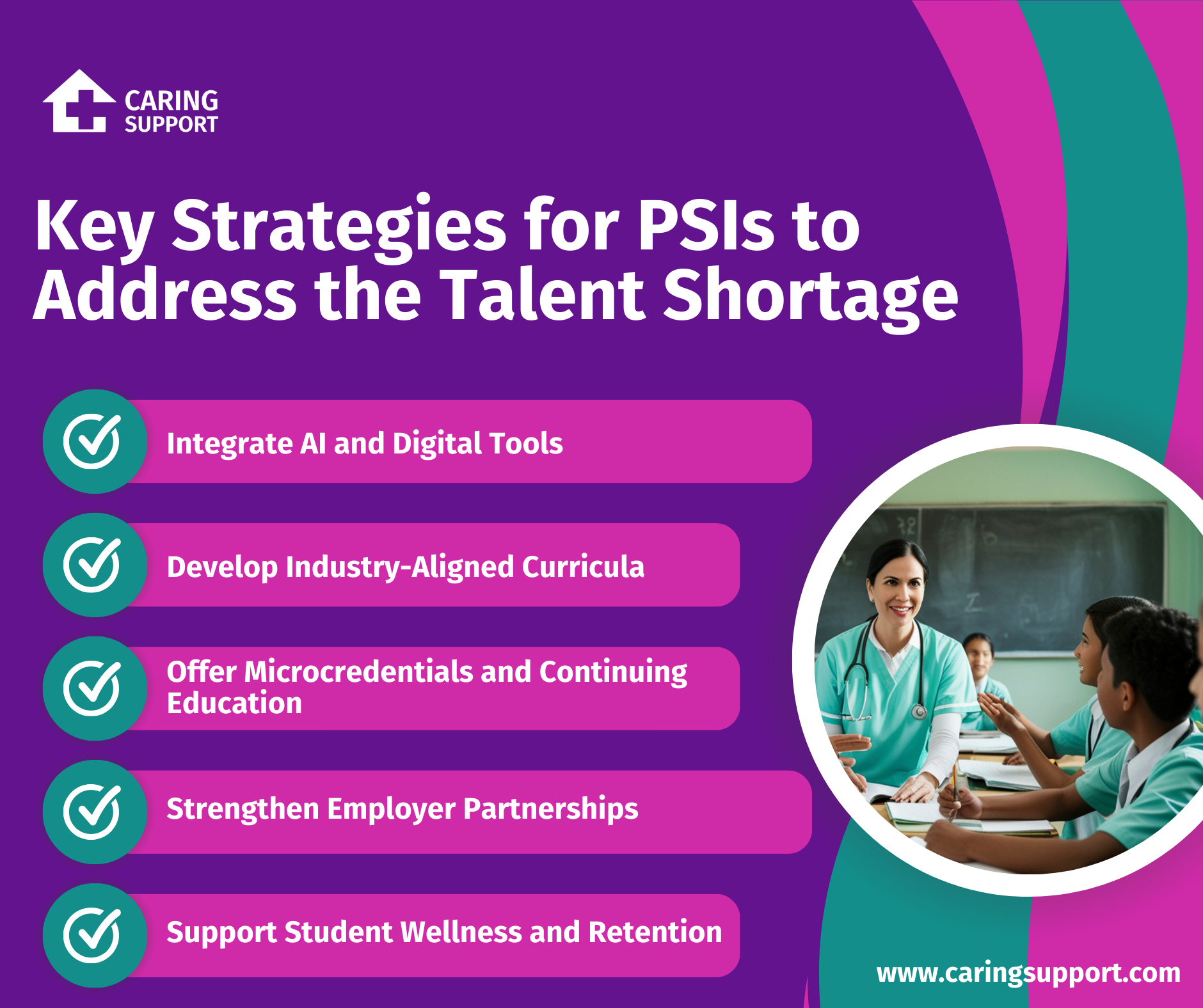
By preparing students with practical skills, creating partnerships with employers, and supporting alumni success, schools can deliver job-ready graduates.
Digital platforms and AI help match students with clinical sites efficiently, track progress, and improve placement outcomes.
They align curricula with industry needs, provide practical experience, and create direct pipelines to employment.
Scholarships, mentorship programs, and career guidance reduce financial and systemic obstacles, ensuring equitable access.
Short, stackable courses allow students and alumni to gain specialized skills, stay updated on healthcare trends, and improve employability.
Post-secondary institutions are central to addressing Canada’s healthcare talent shortage. By combining practical training, strong employer partnerships, alumni support, and technology-driven solutions, schools can produce highly skilled, job-ready graduates.
Investing in students today ensures that hospitals, clinics, and healthcare organizations have the workforce they need tomorrow. In a competitive healthcare landscape, PSIs have the opportunity — and responsibility — to shape the future of Canada’s healthcare system.
We'll keep you updated on all new application updates and features!