
Canada’s healthcare system is evolving rapidly, and with workforce shortages projected across multiple sectors, post-secondary institutions play a pivotal role in preparing the next generation of healthcare professionals. For students entering college or university in 2026, choosing the right program can be the key to long-term career success, job readiness, and meaningful impact in patient care.
At the same time, platforms like Caring Support are bridging the gap between education and employment, helping students transition from classroom to clinic with confidence.
Healthcare employers increasingly prioritize graduates who are job-ready from day one, with practical skills, clinical experience, and industry-relevant knowledge. Programs that combine hands-on training with theoretical foundations ensure students graduate with the competencies needed to contribute effectively in hospitals, long-term care facilities, and community health settings.
Post-secondary institutions play a crucial role in addressing Canada’s talent shortage. As highlighted in The Role of Post-Secondary Institutions in Solving Canada’s Healthcare Talent Shortage, institutions that align curriculum with workforce needs give students a competitive edge in the job market.
Here’s a list of the most in-demand programs for Canadian students entering healthcare education in 2026:
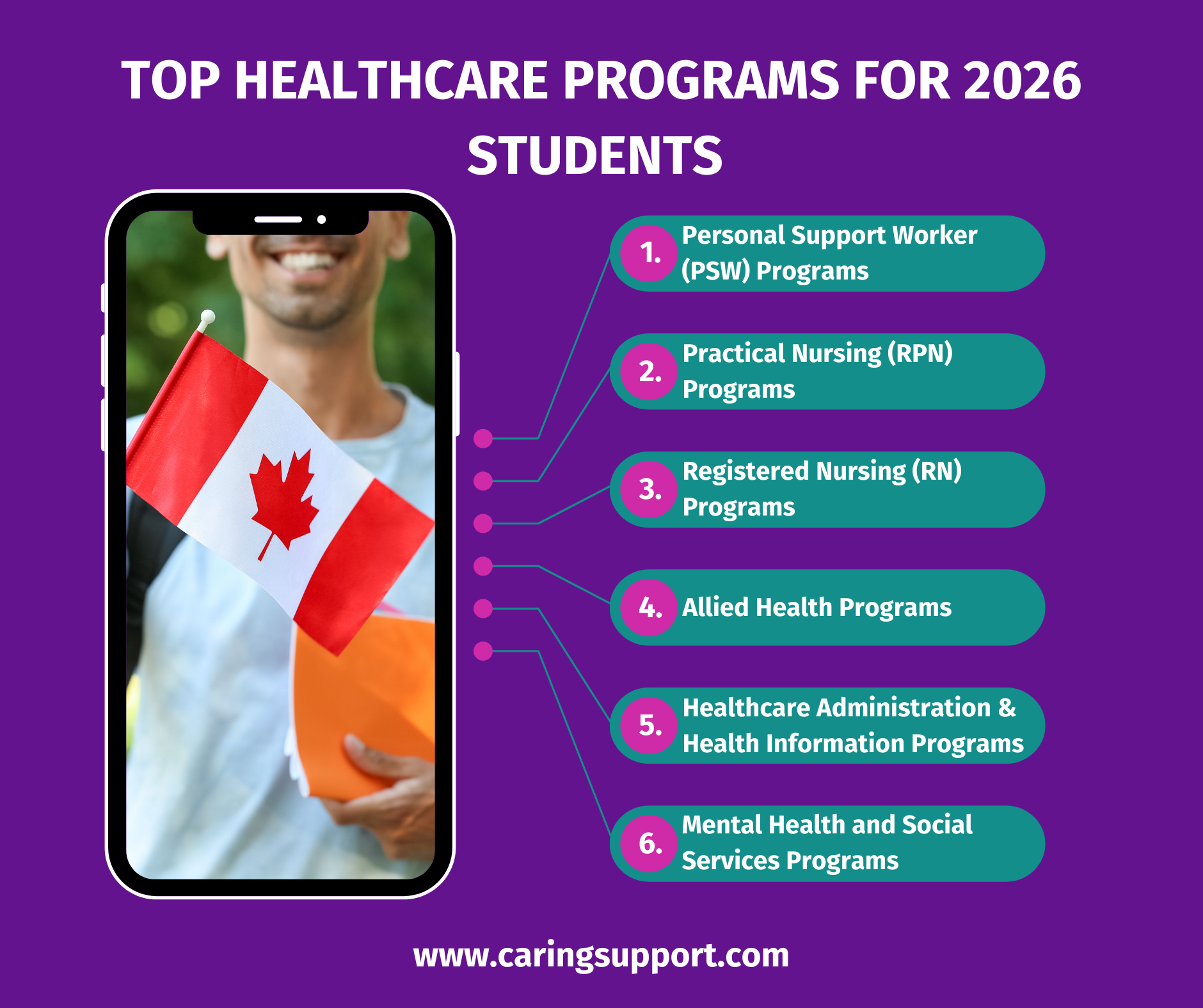
PSWs are the backbone of long-term care and community health. Programs typically combine classroom learning with clinical practicums, ensuring students gain practical skills in patient care, mobility assistance, and infection control. Graduates often find immediate employment opportunities upon completion.
Registered Practical Nurses continue to be in high demand, particularly in long-term care, hospitals, and community health settings. RPN programs equip students with hands-on clinical experience and theoretical knowledge, making graduates ready to take on patient-focused roles efficiently.
RN programs provide in-depth education in nursing theory, patient assessment, and critical care. Graduates are prepared for diverse roles in acute care, specialized units, and leadership positions. According to Helping Students Thrive: Preparing Canadian Healthcare Graduates for the Job Market in Late 2025, RNs remain among the most sought-after healthcare professionals in Canada.
Programs in physiotherapy, occupational therapy, respiratory therapy, and pharmacy technician training are growing in demand. These roles require technical expertise and often involve direct patient interaction, making them vital to Canada’s healthcare infrastructure.
For students interested in the operational side of healthcare, programs in healthcare administration, health information management, and medical office administration provide the skills necessary to manage teams, optimize patient care processes, and maintain compliance with regulations.
With mental health needs increasing, programs for counselors, social workers, and community support workers are critical. These programs prepare students to deliver psychosocial support, crisis intervention, and patient advocacy in a variety of healthcare settings.
While post-secondary institutions provide foundational knowledge, students benefit immensely from platforms that connect them with real-world employment opportunities, resources, and professional networks. Caring Support serves as a bridge between education and employment:
For students entering post-secondary education in 2026, selecting the right healthcare program is more than an academic decision—it’s a career-defining choice. By focusing on programs that balance theory with hands-on learning and leveraging platforms like Caring Support, students can position themselves for long-term success.
Post-secondary institutions and students working together with innovative career platforms ensure Canada’s healthcare workforce remains skilled, adaptable, and ready to meet the challenges of a rapidly changing system.
Programs such as PSW, RPN, RN, allied health, healthcare administration, and mental health support are among the most in-demand.
Hands-on clinical experience improves job readiness, confidence, and early employment opportunities.
Caring Support connects students with internships, job postings, mentorship, and career resources, reducing barriers and enhancing success.
Yes, fields like physiotherapy, occupational therapy, and respiratory therapy continue to grow due to workforce shortages and increasing patient needs.
Yes, institutions can collaborate to provide students with resources, employer connections, and job-ready skill development.
We'll keep you updated on all new application updates and features!