
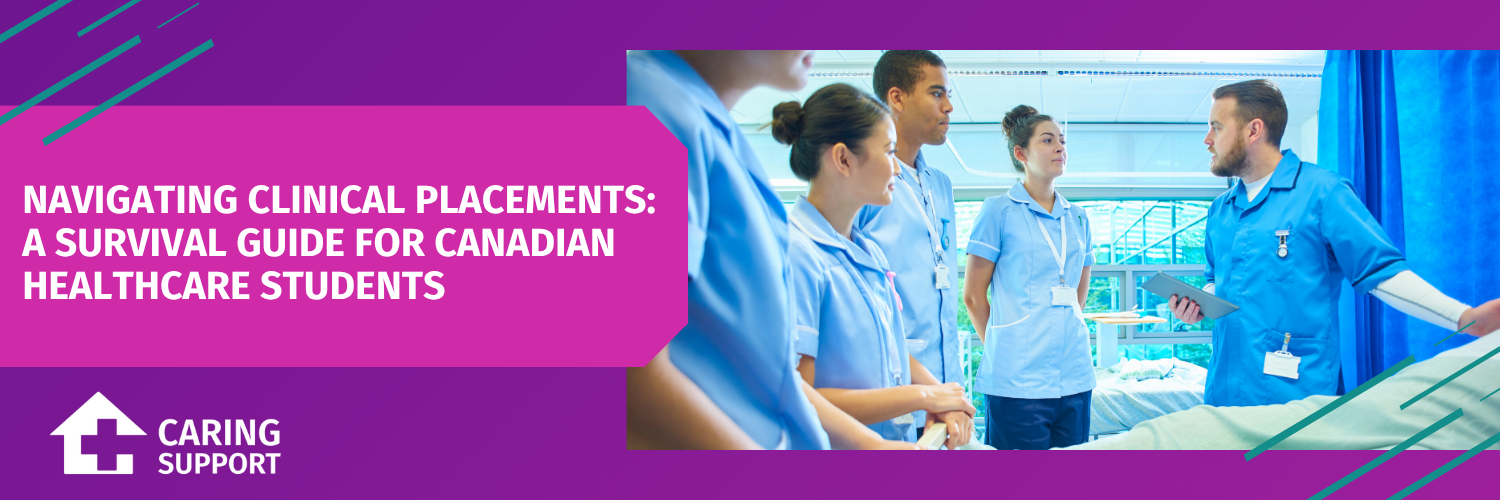
September marks a major milestone for thousands of nursing, Personal Support Worker (PSW), and allied health trainees across Canada. Stepping out of post-secondary lecture halls and simulation labs into acute care units, long-term care facilities, and community health centers represents the true start of your professional journey.
However, transitioning from textbook scenarios to real-life patient care can feel daunting. The fast-paced healthcare ecosystem demands not only clinical competence, but also emotional resilience, administrative diligence, and strong interpersonal skills.
Whether you are preparing for your very first shift or looking to convert your practical training into a permanent job offer, this survival guide outlines actionable strategies to help you thrive during your Canadian healthcare placement.
Before you ever set foot on a hospital floor or interact with a patient, you must satisfy a strict list of pre-placement prerequisites. Academic institutions and clinical site partners enforce non-negotiable compliance deadlines to protect patient safety and institutional public health standards.
Processing administrative documentation in Canada often involves multi-step workflows with local police services, public health clinics, and external testing agencies. Delays during peak autumn back-to-school periods can prevent you from starting your placement on time.
To better understand institutional clearance expectations and how to secure placement opportunities across different provinces, read our complete guide on How to Find a Clinical Placement in Canada: A Practical Guide for Healthcare Students.
Experiencing imposter syndrome and first-shift anxiety is completely normal. Transitioning into direct patient care means handling real-world unpredictability, high-stimulus environments, and unfamiliar electronic health record (EHR) systems.
Preparation serves as the best antidote to anxiety. Reducing cognitive load beforehand allows you to stay focused, calm, and receptive to learning.
For detailed strategies on managing systemic pressures, workload stress, and learning expectations on the ward, consult Clinical Placement Challenges in Canada and How Healthcare Students Can Prepare.
Succeeding on your placement involves far more than performing physical clinical skills. Building strong organizational routines, maintaining clear communication, and displaying professional conduct make a lasting impact on your preceptors and clinical educators.
Use a customized shift sheet (often called a "brain sheet") to organize patient assessments, vital checks, medication times, and lab draws. Keeping track of your tasks on paper or a digital pad prevents missed documentation, improves shift handoffs, and ensures timely care delivery.
Adopt standard communication frameworks such as SBAR (Situation, Background, Assessment, Recommendation) when reporting patient changes to preceptors, physicians, or charge nurses. The Canadian Nurses Association emphasizes structured communication as a key factor in reducing medical errors and building interprofessional trust.
Adhere strictly to institutional dress codes, arrive punctual for shift handoffs, and maintain patient confidentiality at all times. When your assigned tasks are completed, offer assistance to floor nurses or request to observe rare clinical procedures on the unit. Taking initiative expands your clinical skill set beyond basic curriculum requirements.
Maintaining your mental, emotional, and physical well-being is vital throughout your training. Learn how to balance clinical demands with academic studies by reviewing our Back to School Guide: How to Thrive as a Healthcare Student in Canada.
A clinical placement functions as an extended, real-world job interview. Unit managers, charge nurses, and team members frequently evaluate student trainees for potential hire long before formal graduation notices are posted.
Choosing the right educational program sets the foundation for your clinical placement experiences and long-term career success.
If you are planning your academic path or looking to advance your healthcare education, explore our comprehensive guide on the Top Healthcare Programs in Canada.
For students interested in rehabilitation, specialized care, and physical therapy settings, check out our detailed review of the Top Occupational Therapy Programs in Canada.
Notify your academic clinical coordinator and unit preceptor as early as possible before the shift begins. Review your academic institution's specific clinical attendance policy. Most Canadian programs require makeup hours or alternative clinical simulation assignments to meet provincial regulatory body hour mandates.
Approach the situation professionally. Schedule a quiet, private moment to discuss communication styles and learning goals directly with your preceptor. If issues persist or impact your learning safety, contact your faculty clinical liaison or academic placement coordinator for support.
Most undergraduate nursing (BScN/Practical Nursing), PSW, and allied health student practicums are unpaid, required components of the post-secondary curriculum. However, some healthcare organizations offer paid consolidation opportunities, work-study stipends, or externship programs for students in their final years.
Always prioritize patient safety. Politely inform your preceptor that you have not yet learned or been checked off on that specific skill in your academic program. Offer to assist or observe while the preceptor performs the task, so you can learn for the future.
Clinical hour requirements vary by province and profession. For example, practical nursing and BScN programs generally require anywhere from 400 to over 1,000 clinical hours to satisfy regulatory registration standards set by provincial colleges.

We'll keep you updated on all new application updates and features!