
The healthcare landscape in Canada is evolving rapidly. Artificial intelligence (AI), telehealth, and other digital tools are transforming how nurses work, learn, and grow in their careers. For Registered Nurses (RNs), embracing these changes is no longer optional — it’s essential to remain competitive, provide quality patient care, and advance professionally.
This article explores how AI and digital technologies are reshaping nursing careers, the skills needed to thrive, and the opportunities they present for both new graduates and experienced nurses.
AI is becoming an integral part of Canadian healthcare. From predictive analytics to clinical decision support, AI tools help nurses make faster, more accurate decisions. Hospitals are increasingly using AI to streamline workflow, predict patient outcomes, and optimize staffing.
For example, AI-powered algorithms can analyze patient data to identify those at risk of complications, allowing nurses to intervene early. This reduces workload and improves patient safety. For RNs, understanding how to leverage these tools is a key skill for career advancement.
According to a recent report by the Canadian Nurses Association, AI is expected to impact every facet of nursing, from administrative tasks to bedside care, by 2026.
Telehealth has surged in Canada, particularly after the pandemic, and it’s here to stay. Nurses are increasingly engaging in remote patient monitoring, virtual consultations, and digital triage. Telehealth allows nurses to provide care for patients in remote or underserved communities without leaving their homes.
Roles in virtual nursing require new skills, including proficiency with electronic health records (EHRs), remote assessment tools, and digital communication platforms. For nurses considering career growth, learning telehealth competencies is becoming a critical advantage.
Learn more about different types of nursing degrees and how education paths are adapting to include technology-driven healthcare training.
Nurses in Canada are now expected to interact with a variety of digital tools in their daily workflow:
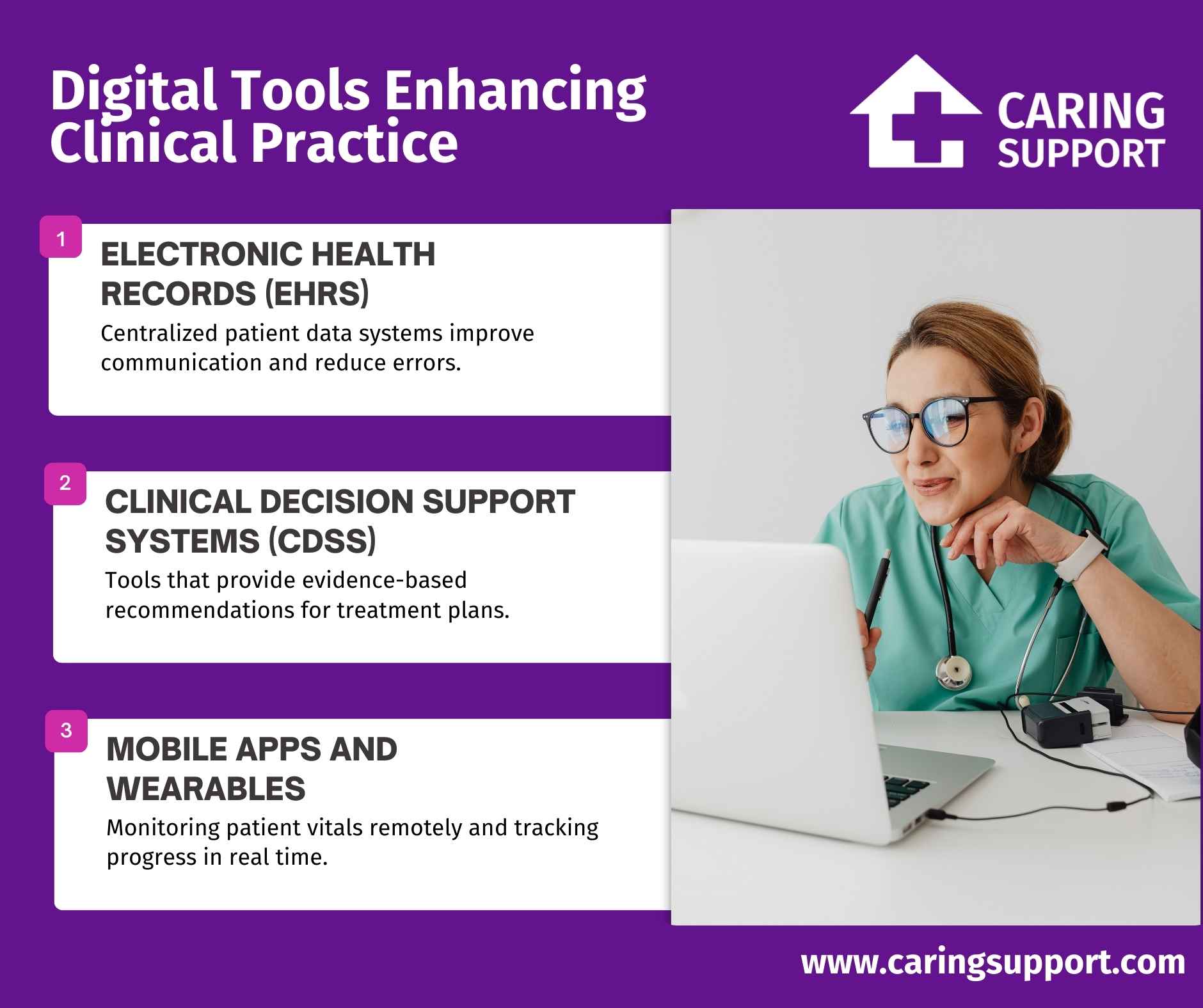
Using these tools effectively allows RNs to spend more time on patient-centered care while reducing administrative burden. Hospitals like the University Health Network (UHN) in Toronto are integrating advanced digital solutions, making it essential for nurses to gain proficiency.
With digital tools becoming mainstream, ongoing education is crucial. Microcredentials and professional development courses help nurses stay ahead of technological trends and acquire in-demand skills.
The Caring Support Academy offers short-form, industry-relevant courses designed for busy healthcare professionals. From AI in clinical practice to digital patient management, these courses equip nurses with the knowledge to thrive in a tech-enabled healthcare environment.
Additionally, programs focusing on telehealth, informatics, and data management are becoming highly sought-after. For students and new grads, exploring nursing scholarships in Canada can help fund these educational opportunities while preparing for a future-proof career.
AI and digital tools allow nurses to anticipate patient needs more accurately. Predictive analytics can identify early warning signs for conditions like sepsis or cardiac complications, enabling prompt intervention. This technology enhances patient outcomes and empowers nurses to practice at a higher level of effectiveness.
Administrative tasks, such as documentation, scheduling, and reporting, are being streamlined by digital systems. Nurses can now focus more on direct patient care instead of paperwork, reducing burnout and increasing job satisfaction.
New nursing roles are emerging in informatics, telehealth coordination, and AI-assisted clinical decision-making. Nurses who gain skills in these areas are positioned for leadership roles and higher earning potential. Check out the top nursing employers in Ottawa to see how institutions are embracing tech-forward positions.
Nurses must be comfortable navigating EHRs, telehealth platforms, and other digital tools. Taking courses in health informatics or clinical technology can provide a competitive edge.
Hospitals and clinical sites increasingly use AI-assisted tools. Familiarity with these systems — even at a basic level — can set your resume apart.
Whether through microcredentials, certifications, or workshops, lifelong learning is key. Explore programs at top nursing schools in Canada to see where you can gain tech-integrated training.
Engage with professional nursing organizations, online communities, and mentors. Networking helps you learn about emerging tools, job openings, and best practices in digital nursing.
While AI and digital tools are transforming nursing, the human element remains central. Nurses must balance technology with compassion, empathy, and communication. Strong soft skills complement technical expertise, ensuring patients receive holistic care.
Employers value RNs who can integrate technology while maintaining strong patient relationships. Skills like problem-solving, teamwork, and adaptability remain critical in every healthcare setting. For practical tips, check out must-have nursing school essentials to prepare for a tech-driven clinical environment.
As we move into 2026, several trends will shape Canadian nursing careers:
Staying informed about these trends can help nurses prepare strategically for future roles.
AI and digital tools are no longer just optional in nursing — they are shaping the future of healthcare in Canada. Nurses who embrace technology, upskill through microcredentials, and adapt to new tools will be well-positioned for career growth, leadership opportunities, and improved patient care.
Whether you are a new graduate or an experienced RN, now is the time to understand these trends, gain experience with digital platforms, and prepare for a tech-driven healthcare environment. Canada’s healthcare sector is evolving, and the nurses who evolve with it will thrive.

We'll keep you updated on all new application updates and features!