
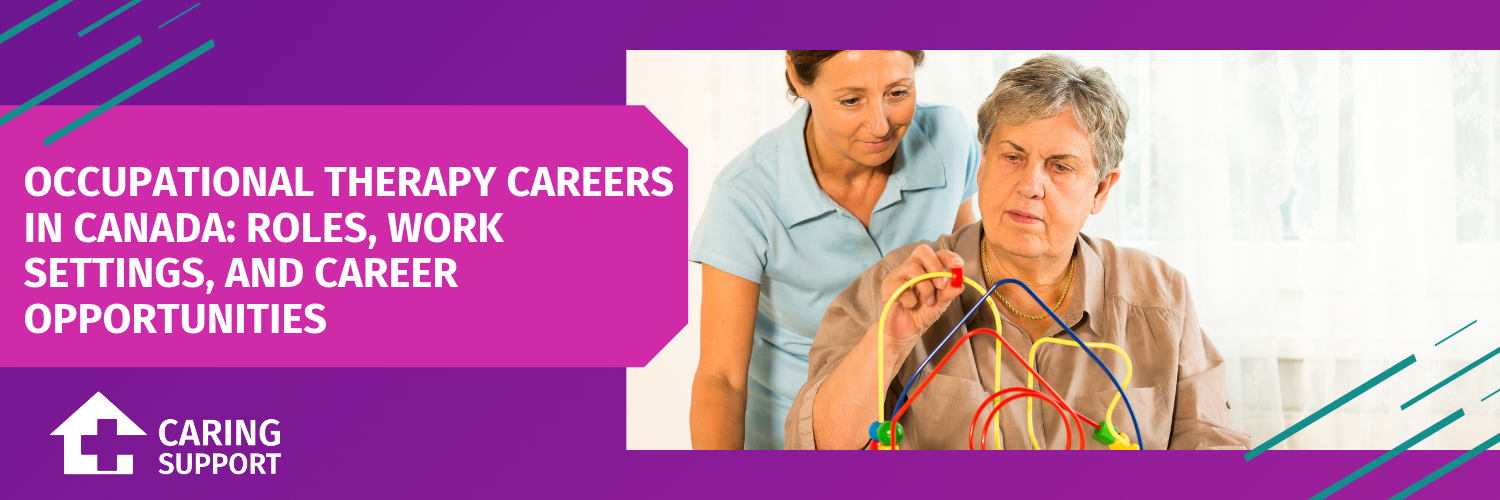
When illness, injury, disability, or mental health challenges prevent individuals from engaging in the activities that give their lives meaning, occupational therapists step in. Occupational therapy (OT) is a client-centered healthcare profession focused on enabling individuals to perform essential everyday activities—or "occupations"—ranging from self-care and work to leisure and social participation.
Every October, the healthcare community celebrates Occupational Therapy Month in Canada. Promoted by the Canadian Association of Occupational Therapists (CAOT), this national awareness campaign honors the dedicated OTs and Occupational Therapist Assistants (OTAs) who empower Canadians across all life stages to overcome barriers and live independent, fulfilling lives.
As Canada's population ages and integrated community care expands, demand for skilled occupational therapy professionals continues to rise. This comprehensive guide breaks down what occupational therapists do, where they work, and how you can pursue a rewarding career in occupational therapy in Canada.
Occupational Therapy Month highlights the critical role OTs play within Canada's health, education, and social care systems. While physical therapy primarily focuses on restoring physical movement and mobility, occupational therapy evaluates how a person's physical, cognitive, emotional, and environmental factors intersect to affect daily function.
Key celebrations during October include:
For students and healthcare job seekers, October offers a great opportunity to explore specialized clinical careers. For a detailed breakdown of career opportunities, job growth, and workplace responsibilities, explore our guide on all about occupational therapist jobs.
In occupational therapy, "occupation" refers to any meaningful activity a person performs daily. These activities are typically categorized into three main areas:
Occupational therapists take a holistic approach to patient evaluation and care planning:
Occupational therapists enjoy remarkable workplace diversity, allowing them to tailor their career paths to specific clinical interests:
Becoming a licensed occupational therapist in Canada requires completing advanced academic credentials, supervised clinical placements, and national registration requirements.
Prospective OTs must first earn a 4-year bachelor's degree from an accredited university. While degrees in kinesiology, psychology, health sciences, human kinetics, or biology are common, any major is acceptable provided prerequisites in anatomy, physiology, statistics, and psychology are completed.
To practice legally in Canada, candidates must complete an accredited Master of Science in Occupational Therapy (MScOT). These professional programs typically span 2 years of full-time study and combine intensive academic coursework with at least 1,000 hours of supervised clinical fieldwork placements.
For a detailed walkthrough on admission requirements, GPA expectations, and prerequisites, read our step-by-step guide on how to become an occupational therapist (and check out our updated feature on how to become an occupational therapist).
To review top academic institutions offering accredited graduate programs across the country, explore our overview of the top occupational therapy programs in Canada.
Upon graduation, candidates must pass the National Occupational Therapy Certification Examination (NOTCE), administered by the Canadian Association of Occupational Therapists (CAOT).
To practice, OTs must register with the regulatory body in their province (such as the College of Occupational Therapists of Ontario, COTO) and maintain active professional liability insurance.
If you want to enter the rehabilitation field faster without completing a master's degree, working as an Occupational Therapist Assistant (OTA) or Physiotherapist Assistant (PTA) is an excellent alternative.
OTAs/PTAs work under the direct supervision of licensed OTs and PTs to implement treatment plans, lead exercise sessions, prepare therapy equipment, and record patient progress. Most OTA/PTA diploma programs take 2 years to complete at public community colleges.
Learn more about diploma coursework, clinical practice requirements, and career options in our guide on physiotherapist assistant programs Canada.
To learn more about national practice standards, examination dates, and provincial accreditation, consult these leading organizations:
Occupational therapy offers a career path focused on human dignity, rehabilitation, and practical care. Whether you are aiming to become a licensed occupational therapist or start your journey as an OTA, finding supportive employers and accredited educational programs is key to long-term professional growth.
At Caring Support, we connect occupational therapists, assistants, nurses, and allied health professionals with top hospitals, rehabilitation centers, school boards, and community health organizations across Canada.
Ready to take the next step in your rehabilitation career? Create a free account on Caring Support today to showcase your clinical skills, connect with hiring managers, and discover exciting job opportunities.
Physical therapists focus primarily on improving physical movement, joint mobility, muscle strength, and gross motor function. Occupational therapists focus on how physical, cognitive, or emotional limitations affect a person's ability to perform meaningful daily tasks (occupations) like bathing, cooking, working, or attending school.
It typically takes 6 years of university study: a 4-year undergraduate bachelor's degree followed by a 2-year Master of Science in Occupational Therapy (MScOT) degree.
Salaries vary by province, years of experience, and sector (public hospital vs. private practice). On average, licensed occupational therapists in Canada earn between $75,000 and $105,000 annually, with senior clinicians and private consultants earning higher incomes.
Yes, internationally educated occupational therapists must have their credentials assessed through the Substantial Equivalency Assessment System (SEAS) managed by the Association of Canadian Occupational Therapy Regulatory Organizations (ACOTRO) before writing the NOTCE exam and registering with a provincial college.
Yes. Occupational therapists are extensively trained in psychosocial health. They work in psychiatric facilities, community mental health centers, and addiction recovery programs to help clients build daily routines, manage anxiety, and re-integrate into workplace and community activities.

We'll keep you updated on all new application updates and features!